 Translate


AI Summary
- Annual FLA returns are a mandatory FEMA compliance for Indian entities with foreign investments, overseas assets, or liabilities, filed via the RBI's FLAIR portal.
- Companies often miss FLA returns due to finance team changes, incomplete handovers, outdated records, or simple unawareness of the requirement.
- The Foreign Liabilities and Assets return captures key data on foreign assets, liabilities, FDI, and overseas investments under FEMA, 1999.
- Missed or delayed FLA filings frequently surface during due diligence for new transactions, making timely rectification essential.
- To fix past defaults, assess your investment history, finances, and FEMA obligations to build a clear roadmap for compliant future filings.
For companies with foreign investments or overseas assets, annual FLA returns constitute an important FEMA compliance. And yet, they can be easily missed out on
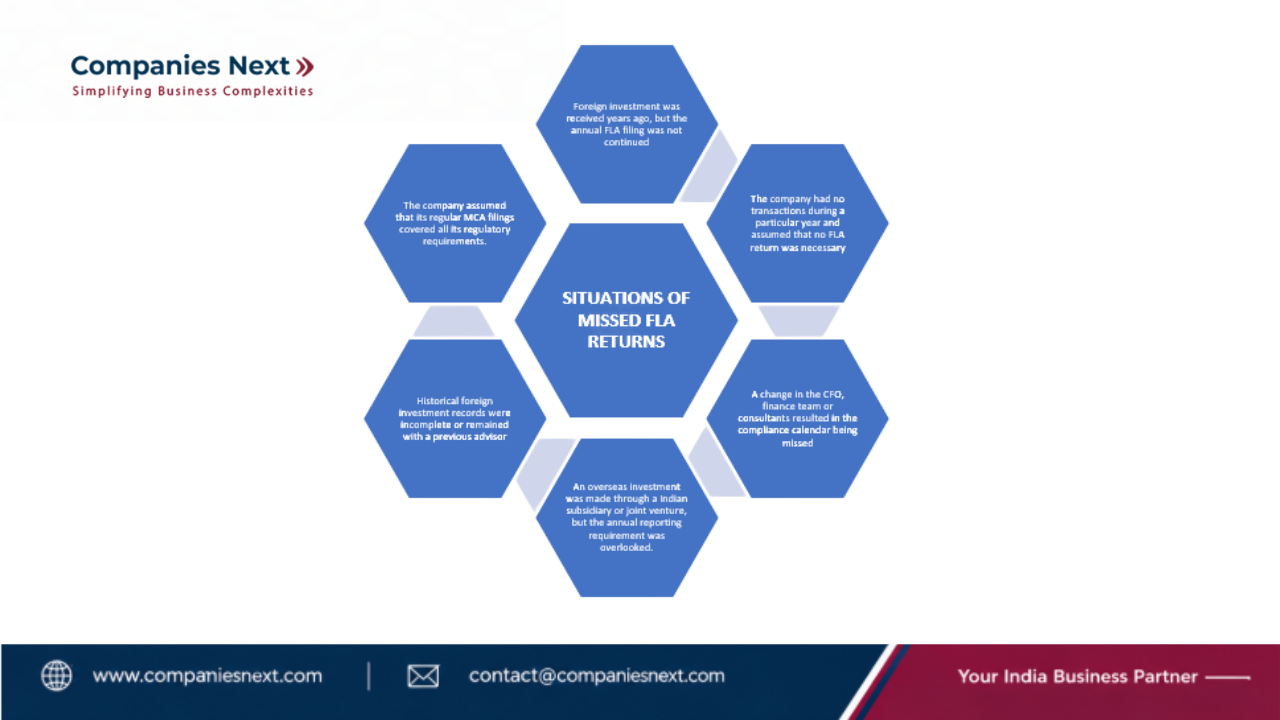
With a change in finance teams, incomplete handover notes, old records left with your previous advisor or even simple ignorance about the requirement, years can go by without a single FLA return being filed.
When such situations arise, the most important step is to take stock of the situation in order to ascertain what was due, what was actually filed, and what needs to be done in order to rectify the situation. This generally involves an analysis of the company’s investment history, finances and FEMA requirements.
In most such cases, the reason for delayed or missed filings can be completely innocuous, as per the change in the company’s internal setup.
Below is a guide to missed FLA returns, including an overview of what constitutes such returns, as well as what your next steps should be.
Old FLA defaults often come to light when a company is preparing for another transaction—for example:

What is an FLA return?
The Foreign Liabilities and Assets (FLA) return is the annual RBI return, which eligible Indian entities with foreign investments or overseas assets/liabilities are mandated to file through the FLAIR portal, in accordance with the Foreign Exchange Management Act, 1999 (FEMA). This return captures the relevant information of the company’s foreign assets and liabilities, including FDI and overseas investments, among other items.
Why do FLA returns get missed?
While it is easy to jump to conclusions about old returns being filed, it is essential first to take stock of the company’s situation in order to create a comprehensive roadmap for future filings.
Step 1: Identify the outstanding years
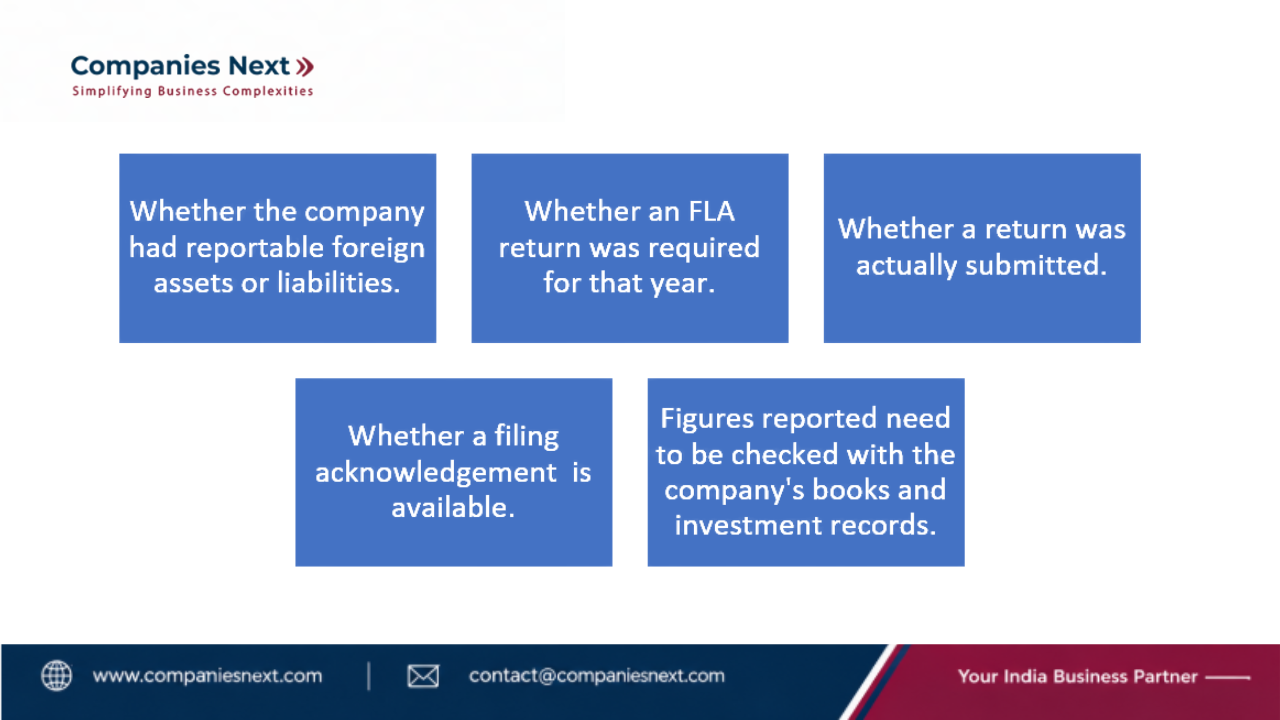
The first step in rectifying the situation is to create a compliance tracker of sorts for the years you are missing the FLA returns.
This is important to ensure that you can differentiate between returns that were not filed versus returns whose records have been lost or misplaced.
Step 2: Reconstruct the investment history
For older returns, a simple analysis of the company’s finances might not suffice, which is why it is important to gather the required supporting documents for the years in question, including:
• Records of foreign investment, Subscription of shares, etc.
• Share certificates
• Bank remittance records
• Overseas investment records, approvals, reports, etc. (if applicable)
• Financial reports of foreign subsidiaries, joint ventures, or associates (if applicable)
• Valuation reports (if applicable)
• Loans, guarantees, and other financial instruments related to overseas entities (if applicable)
• FLA acknowledgments (if any)
• Earlier correspondence with RBI or FEMA (if any)
This is intended to create a reasonable projection of the company’s foreign liabilities and assets for each of the years of interest.
Step 3: Reconcile the numbers
Using the information collected, you must now reconcile your books in order to ensure that there are no discrepancies. In cases of missed filings, such inconsistencies are entirely expected, especially if the currency and exchange rates were converted during the time of recording. Other reasons for discrepancies can include additional investments, changes in ownership structure, share transfers, overseas loans, etc.
It is essential to understand the details and how the final figures for each year came to be, instead of simply relying on information from your books for accuracy.
Step 4: Check the current RBI reporting mechanism and applicable process
It is possible that RBI reporting mechanisms and procedures change, especially if the company has been dealing with these filings for a long time. Therefore it is essential to ensure that you are aware of the current filing procedure, especially if there have been changes since the last FLA return was filed. If you have years of FLA returns pending, it is critical to identify what extra steps, if any, might have been introduced since the last filing date. There can be additional steps that need to be taken for older filings that may not have been mandatory at the time.
Step 5: Look Beyond the FLA Return
A missed FLA return filing might be indicative of a larger issue with the company’s FEMA compliance, which is why it is important to look beyond the FLA return to ensure that there are no issues in any other area of FEMA reporting. Some questions to ask yourself include:
• Was the original foreign investment reported correctly?
• Were any downstream or overseas investment requirements triggered?
• Were any share transfers or ownership changes reported?
• Did the company comply with valuation requirements?
• Were other RBI/FEMA forms filed?
• Did the company make or receive any foreign remittances that require further reporting?
There might be additional compliance requirements beyond these points which should also be taken into consideration in order to ensure that the company is up to date with all aspects of its FEMA reporting.
What about late fees or penalties?
The implications of a missed FLA return can vary depending on a number of factors, ranging from the specifics of the delay to any other FEMA-related issues that might arise. In order to assess the situation properly and understand the best course of action, it is best to consult a professional with the relevant expertise in RBI/FEMA reporting for companies with pending FLA returns for years at a time.
In the meantime, it is best to perform a FEMA compliance health check before making any other transactions, including FLA returns. Here is a FEMA compliance health checklist that can help:
Comprehensive checklist for missed FLA returns
In case your company has years of missed FLA returns, here is a brief, yet informative, compliance checklist to follow:
- List down all foreign investments and overseas investments.
- Identify the reporting years.
- Ensure you have records for the returns that have already been filed.
- Gather the missing financial, banking, and investment records.
- Reconcile the information with the company’s books.
- Review related FEMA compliance requirements.
- Determine the appropriate regularisation process.
- File the required documents or make the necessary reports.
- Set up an annual compliance calendar so that no future filings are missed.
Once the situation has been brought up to speed, it is crucial to ensure that no further delinquencies occur. This is why an annual compliance calendar is so important in the long-term outlook of your company’s FEMA reporting.
Final takeaway
If your company’s FLA filings have been pending for years, it is important to take the situation seriously before attempting to file any FLA returns. In cases of pending returns, identifying the relevant years for filing is the first step towards bringing your company’s reporting practices up to speed.
Once the situation has been properly assessed, it will be easier to determine what needs to be done to ensure that your company’s FLA filings continue to meet all requirements in the future.
Need Help with Your Pending FLA Returns?
At CompaniesNext, we can help you review your historical FLA compliance, reconstruct your investment records, reconcile reports and more. If your company has pending FLA returns for one or more years, contact us to review your FLA compliance and understand what steps need to be taken in the future.